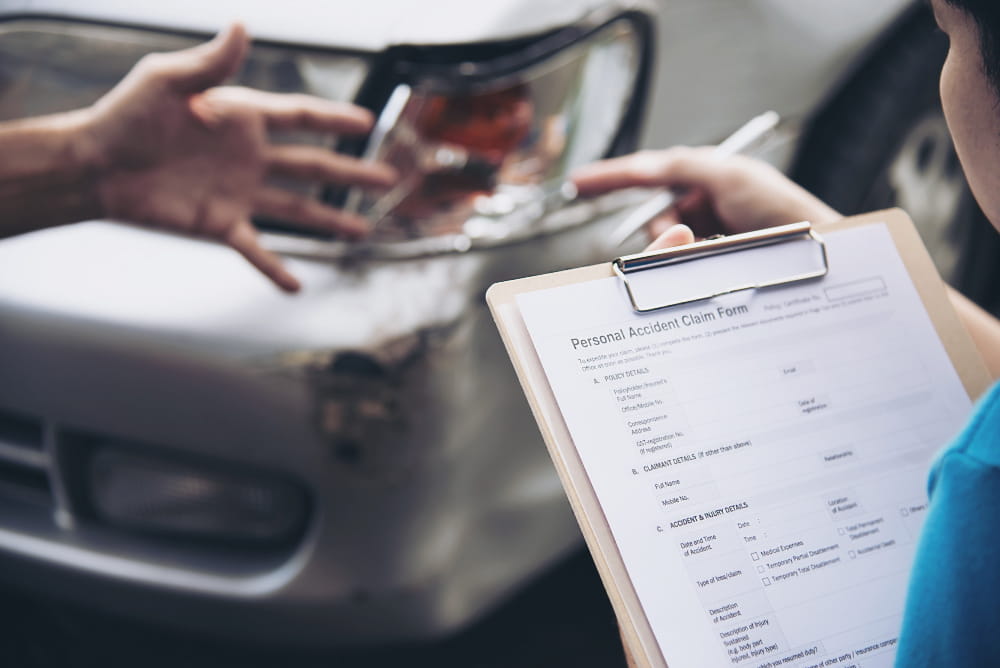
New Jersey has good reason to revisit PIP, but requiring more coverage isn’t automatically better for every driver. Current New Jersey PIP insurance laws let people with standard policies choose medical benefits between $15,000 and $250,000. Basic policies generally start with $15,000 for ordinary medical expenses. S3125 would remove that range and require $250,000 in medical benefits under both standard and basic policies.
A second proposal, S3142, deals with who pays first. Drivers who qualify can currently use health insurance as the primary payer for accident treatment and receive a PIP premium reduction. S3142 would end that option and make PIP primary. Our lawyer can explain how PIP coverage may affect medical expenses, insurance claims, and compensation after a New Jersey crash.
Table of Contents
- Should New Jersey Increase PIP Coverage?
- How Could PIP Changes Affect New Jersey Drivers?
- What PIP Choices Can Leave Drivers Underprotected?
- When Should You Contact a New Jersey PIP Lawyer?
- Frequently Asked Questions
Should New Jersey Increase PIP Coverage?
New Jersey gives drivers more say over PIP than many people realize. That choice can lower an insurance bill, but it can also leave a driver with far less medical coverage after a serious crash.
Should New Jersey Require $250,000 in PIP Coverage?
PIP generally pays covered medical expenses without waiting for a decision about negligence, liability, or fault. With a standard policy, a driver may choose $15,000, $50,000, $75,000, $150,000, or $250,000 in medical coverage. Basic policies generally provide $15,000, although certain severe injuries receive higher protection. S3125 would set the medical limit at $250,000 per person, per accident, for both standard and basic policies. That would give New Jersey car accident PIP coverage far more room to handle surgery, hospital care, rehabilitation, testing, and other medical expenses. A driver who now chooses $15,000, however, would no longer have that lower-cost option.
Should PIP Pay Before Health Insurance?
People with qualifying health coverage can currently make their health insurer responsible for accident-related treatment before PIP. The choice comes with a reduction in the PIP portion of the auto premium. S3142 would reverse that arrangement. PIP would pay first, and the health-primary option would disappear. The Senate Commerce Committee advanced S3142 on March 16, 2026, and the Senate passed it on March 23. It remains pending in the Assembly. Using one primary source of accident coverage may avoid some billing disputes.
How Could PIP Changes Affect New Jersey Drivers?
PIP limits can seem abstract while someone is buying a policy. They become much more concrete once hospital bills and follow-up treatment begin arriving.
What Happens When $15,000 in PIP Is Not Enough?
Suppose a driver has $15,000 in PIP but needs $60,000 in reasonable treatment after a crash. Reaching the PIP limit does not necessarily make the other $45,000 unrecoverable. New Jersey law may allow certain uncompensated economic losses to be recovered from a responsible tortfeasor when the facts support that claim. The problem is that payment becomes less straightforward once PIP is exhausted. Unpaid expenses may have to be addressed through a broader personal injury claim, where fault and other legal questions come into play. S3125 would give every covered driver a much larger pool of first-party medical benefits.
How Could PIP-First Coverage Affect an Insurance Claim?
For drivers who now rely on health insurance first, S3142 would change the order in which bills are paid. If enacted and applicable to the policy, PIP would become the first source of payment after the accident. That may make an insurance claim easier to sort out when health and auto insurers disagree over responsibility. It would not remove every payment issue. Deductibles, copayments, unpaid balances, and available compensation would still depend on the policy terms and the circumstances of the crash.
What PIP Choices Can Leave Drivers Underprotected?
The cheapest policy choice can cost more later. A low medical limit or a large deductible matters most when treatment is needed immediately and continues for weeks or months.
Why Is Choosing the Lowest PIP Limit Risky?
New Jersey generally has a $250 standard PIP medical deductible, with higher deductible choices of $500, $1,000, $2,000, and $2,500. A 20% copayment generally applies after the deductible and through the first $5,000 in medical benefits. A lower premium can make sense to someone watching a monthly budget, but that is only part of the decision. A driver also has to think about existing health coverage, savings, likely out-of-pocket costs, and the effect of missing work after an accident.
How Is PIP Different From a Liability Claim?
PIP pays covered benefits without first deciding who caused the accident. A liability claim works differently. To recover from another driver, the injured person generally has to establish fault and show which losses can legally be claimed. Standard-policy drivers also choose between limitation-on-lawsuit and no-limitation-on-lawsuit options for non-economic loss. PIP therefore does not replace a person’s broader legal rights after a collision. A pain-and-suffering claim and a possible settlement with an at-fault driver are separate issues.
When Should You Contact a New Jersey PIP Lawyer?
Some PIP problems start with an unpaid bill. Others develop when benefits are nearly gone, or two insurers disagree about who should pay.
When Does a PIP Dispute Need a Lawyer?
Legal review may help when an insurer says treatment is not medically necessary, questions whether a charge is covered, or warns that available benefits are nearly exhausted. A disagreement between health and auto carriers can also delay payment. Lost income deserves separate attention. Standard PIP includes income-continuation benefits subject to policy terms and limits, and additional PIP packages may offer higher benefits. Those payments do not necessarily replace all lost wages.
How Can a Lawyer Handle PIP and Injury Claims?
A lawyer can look at the policy, unpaid medical expenses, treatment records, accident fault, liability insurance, and losses PIP does not cover. That helps keep a first-party benefits dispute separate from any claim against the person responsible for the crash. Time limits also vary. N.J.S.A. 39:6A-13.1 contains a separate statute of limitations framework for PIP benefit actions, generally tied to the loss, expense, and knowledge requirements stated in the statute.
Frequently Asked Questions
Is New Jersey PIP Still No-Fault?
Yes. PIP remains a no-fault system. The 2026 proposals deal with how much medical coverage is required and which insurer pays first.
Does Every New Jersey Driver Have $250,000 in PIP?
No. Standard-policy drivers can still choose lower medical limits. Basic policies generally provide $15,000 for ordinary medical expenses, with greater protection for certain severe injuries.
Has New Jersey Passed the $250,000 PIP Proposal?
No. S3125 is still proposed legislation. The $250,000 mandatory medical limit is not current New Jersey law.
Does New Jersey PIP Cover Lost Wages?
Yes, depending on the policy. Standard PIP includes income-continuation benefits, and additional PIP packages may provide higher options.
Can You Recover Medical Bills PIP Does Not Pay?
Potentially. Certain uncompensated economic losses, including unreimbursed medical expenses, may be recoverable from a responsible tortfeasor when New Jersey law and the facts support the claim.